
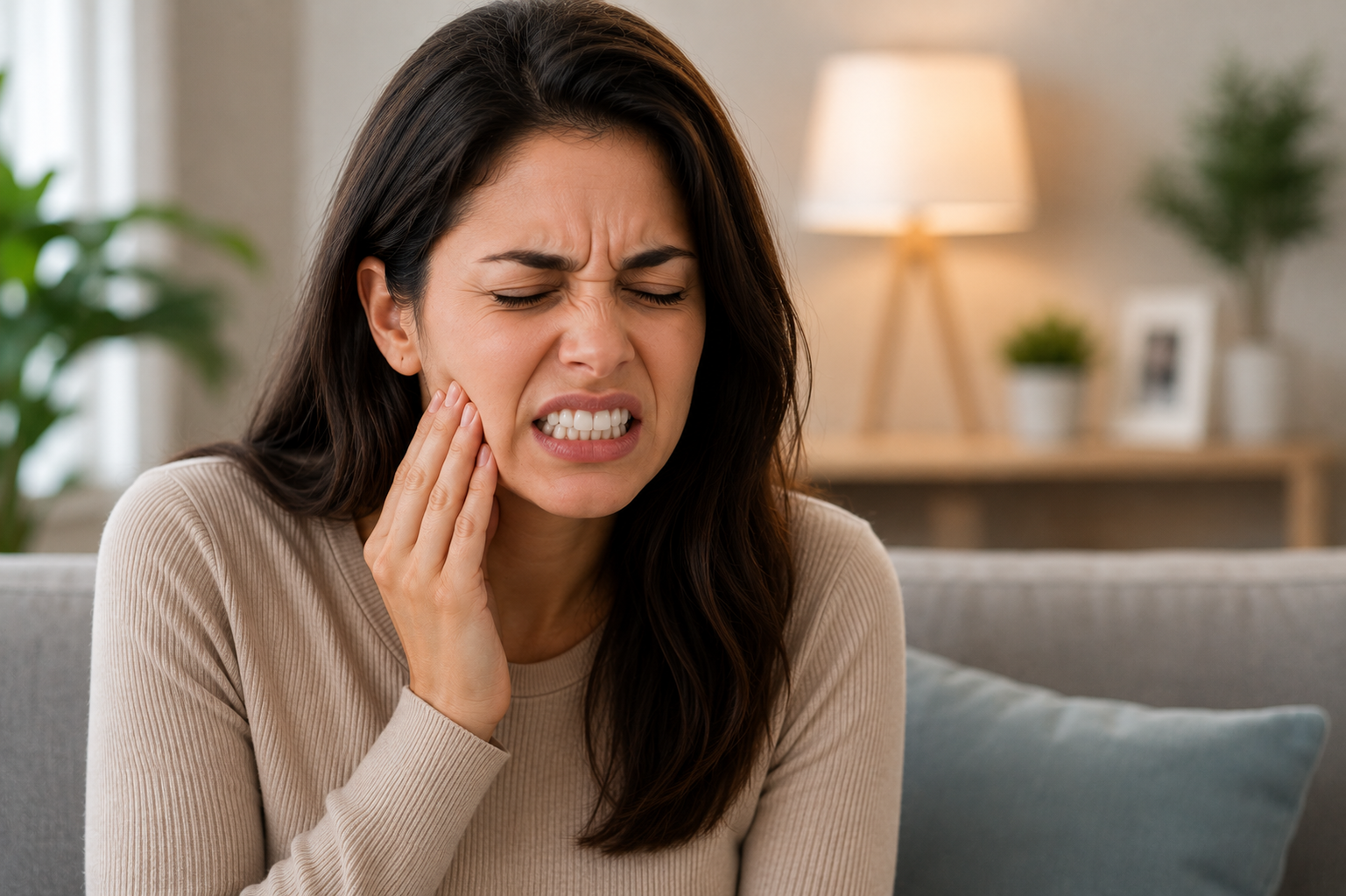
A lot of dental problems come with an obvious warning sign. Teeth grinding usually does not. Most people who grind or clench their teeth at night have no idea they are doing it, and find out only when a dentist notices flattened, worn-down teeth during a routine checkup, or when a partner mentions hearing a grinding sound in their sleep. By the time it is noticed, the habit itself, known clinically as bruxism, has often been quietly wearing teeth down for months or years.
Bruxism is one of those conditions that sounds minor until you understand what it is actually doing to a tooth, night after night, without you ever being aware of it. Here is what is actually happening when someone grinds their teeth, why it is so often missed, and what can be done once it is caught.
How Common Is Teeth Grinding, Really?
Estimates for bruxism vary more than almost any other dental condition, largely because so much of it goes unreported by the people experiencing it. Systematic reviews pooling data across tens of thousands of people have found that self-reported daytime clenching or grinding, known as awake bruxism, affects roughly a quarter of adults, while sleep bruxism, the more damaging nighttime version, tends to be reported in a smaller but still substantial share, often cited between eight and sixteen percent.
Other research paints an even broader picture. Some reviews estimate that awake bruxism affects somewhere between twenty and thirty percent of adults, while other studies looking at lifetime prevalence, meaning whether someone has ever ground their teeth at some point, report figures as high as the majority of adults. A long-term Brazilian cohort study following the same group of people into adulthood found bruxism prevalence of just over forty percent by age thirty-one, and found a clear association with common mental health symptoms like stress and anxiety.
A few patterns show up consistently across the research. Bruxism tends to be more common in younger and middle-aged adults than in people over sixty-five. It shows up more frequently in women in several large studies. And it is closely tied to stress, with multiple studies documenting spikes in grinding during periods of widespread anxiety, including a notable increase reported during the COVID-19 pandemic. Given how much of this happens unconsciously, especially during sleep, most researchers agree that these numbers likely undercount the true prevalence rather than overstate it.
What Is Actually Happening Inside Your Mouth
Bruxism comes in two distinct forms, and they behave differently. Awake bruxism tends to involve clenching more than grinding, often happening during moments of concentration or stress, like being focused on a screen or sitting in traffic, and it is usually a semi-conscious habit that can be noticed and interrupted once someone becomes aware of it. Sleep bruxism is different. It is classified as a movement disorder, involving rhythmic grinding and clenching that happens during sleep, entirely outside conscious control, and it tends to generate significantly more force and more damage than daytime clenching does.
The force involved is the core of the problem. Chewing during a normal meal puts a certain amount of predictable, cushioned pressure on teeth. Grinding applies repetitive, often much greater force, in directions teeth are not built to withstand, and it does so for extended stretches of time rather than the brief moments involved in normal chewing. Over months and years, that repeated force gradually wears down the enamel on the chewing surfaces of teeth, flattening cusps that were once pointed and thinning enamel that took decades to form and cannot regenerate once it is gone.
The effects are not limited to the teeth themselves. The same muscles used for grinding are the muscles used for every other jaw movement, so sustained overuse can lead to jaw muscle fatigue, soreness, and tension headaches, particularly noticeable first thing in the morning. The jaw joint itself can become strained as well, sometimes contributing to clicking, popping, or discomfort when opening and closing the mouth. And existing dental work is not immune either; crowns, fillings, and bridges all face the same repetitive force, and grinding is one of the more common reasons these restorations fail earlier than expected.
Why This Habit Is So Easy to Miss
Sleep bruxism has an almost perfect design for going unnoticed. It happens while you are unconscious, it does not typically wake the person doing it, and unless a partner happens to hear it, there is often no direct feedback at all that it is even occurring. Awake bruxism is only slightly easier to catch, since clenching during a stressful moment or while concentrating rarely registers as unusual behavior in the moment.
Because of this, the first sign many people notice is not the grinding itself, but a downstream effect: a tooth that suddenly feels different when chewing, a morning headache that has become routine, jaw soreness that seems to have no clear cause, or a dentist commenting during a cleaning that certain teeth show more wear than expected for the person’s age. By the time any of these show up, the underlying habit has often been active for a meaningful stretch of time already.
What a Dentist Actually Checks For
Diagnosing bruxism relies heavily on physical signs, since the behavior itself is so rarely witnessed directly. A dentist will look closely at the wear patterns across the biting surfaces of the teeth, checking for flattened cusps, thinning enamel, or small fracture lines that are consistent with repetitive grinding rather than normal use.
They will also examine the jaw muscles and joint, checking for tenderness, asymmetry, or signs of overuse, and will ask about symptoms like morning jaw soreness, headaches, or an audible clicking sound when opening or closing the mouth. Existing dental work gets particular attention as well, since a crown or filling that is chipping, loosening, or wearing prematurely can be one of the clearer physical indicators that grinding is happening. And because stress is so strongly linked to bruxism, a dentist may also ask about sleep quality, caffeine intake, and general stress levels, since these details help build a more complete picture of what is driving the habit.
Treatment Options: From a Nightguard to Managing the Underlying Cause
Treatment for bruxism generally works on two tracks at once: protecting the teeth from further damage, and where possible, addressing whatever is driving the grinding in the first place.
A custom nightguard is the most common and most direct protective measure. Worn during sleep, it creates a physical barrier between the upper and lower teeth, absorbing the force of grinding so it is distributed across a durable appliance instead of wearing down enamel directly. Custom-fitted nightguards, made from an impression of your own teeth, tend to be far more effective and comfortable than generic over-the-counter versions, since fit plays a large role in how well the appliance actually protects the teeth during use.
Addressing stress and sleep quality is often part of the broader picture, particularly for people whose grinding closely tracks periods of anxiety or poor sleep. This does not fall solely within a dentist’s scope, but a dentist can flag the connection and, where appropriate, suggest working alongside a physician or counselor on the underlying driver rather than treating only the physical symptom.
Correcting bite alignment becomes relevant in cases where a misaligned bite is contributing to grinding, since uneven contact between upper and lower teeth can encourage the jaw to grind in an attempt to find a more comfortable resting position.
Restoring damaged teeth is necessary once wear has already caused meaningful damage, whether that means bonding to rebuild a worn edge, a crown to protect a heavily worn tooth, or replacing dental work that has failed under the added stress of grinding.
In some cases, muscle relaxation approaches, including specific exercises, jaw stretches, or short-term medication in more severe cases, are used alongside a nightguard to reduce overall muscle tension, particularly when jaw soreness is a prominent symptom.
Signs Your Grinding Is Worth a Closer Look
A little occasional jaw tension is common and not necessarily cause for concern. A few patterns are worth bringing to a dentist’s attention specifically:
- Waking up with a sore jaw, tight facial muscles, or a dull headache on a regular basis
- A partner or family member mentioning they have heard grinding sounds at night
- Teeth that look noticeably shorter, flatter, or more worn than they used to
- Increased sensitivity to hot or cold that has developed gradually rather than suddenly
- A crown, filling, or other dental work that has chipped, loosened, or failed earlier than expected
- Jaw clicking, popping, or discomfort when opening and closing your mouth
- Catching yourself clenching your jaw during the day, especially when concentrating or stressed
If several of these apply, it is worth mentioning explicitly at your next visit rather than assuming morning headaches or a sore jaw are unrelated to your teeth.
What to Expect From an Evaluation
A conversation about your symptoms. Morning jaw soreness, headaches, sleep quality, stress levels, and whether anyone has mentioned hearing you grind at night.
An exam of your teeth and jaw. Checking wear patterns on the biting surfaces, the condition of existing dental work, and the jaw muscles and joint for tenderness or asymmetry.
A discussion of contributing factors. Including stress, caffeine intake, and any medications that can influence muscle tension or sleep quality.
A treatment plan matched to severity. This could mean a custom nightguard, restorative work to repair existing damage, or a broader conversation about managing the stress or sleep issues driving the habit.
Frequently Asked Questions About Teeth Grinding
How do I know if I grind my teeth if I can’t feel it happening? Most people find out through physical signs rather than noticing the act itself, including a partner mentioning the sound, waking up with jaw soreness, or a dentist pointing out wear patterns during a routine exam.
Are over-the-counter nightguards good enough, or do I need a custom one? A custom nightguard, made from an impression of your specific teeth, generally fits better and protects more effectively than a generic one, and tends to be more comfortable enough that people actually wear it consistently, which matters more than the guard itself.
Can stress alone cause teeth grinding, or is something else usually going on? Stress is one of the most consistently identified factors linked to bruxism, but it is often one contributor among several, alongside sleep quality, caffeine intake, and in some cases bite alignment. An evaluation helps identify which factors are relevant in your specific case.
Chiu Dental Is Here When You Need Us
Chiu Dental is Kitchener-Waterloo’s friendly dental home, and teeth grinding is one of those conditions we often catch before a patient even realizes it is happening. Our goal is to identify the wear pattern early, protect your teeth from further damage, and talk through what might be driving the habit, all in a welcoming, judgment-free environment.
The most important step is getting your teeth and jaw properly evaluated. Grinding can be caused by stress, sleep issues, bite alignment, or a combination of factors, and the sooner it is identified, the less permanent wear your teeth will accumulate in the meantime.
We are currently accepting new patients at our Waterloo office. If you have been waking up with jaw soreness or headaches, or a partner has mentioned hearing you grind at night, call us today, and we’ll get you in as quickly as possible.
Our office is located at 113-5 Father David Bauer Dr, Waterloo, ON N2L 6M2. Call us at (519) 884-0887 to book your appointment, or schedule online at hellochiu.com. For dental emergencies, reach us at 1-888-757-9361.
.